
1. Introduction
In today’s fast-paced business world, keeping track of customers, their needs, and their interactions with your company is more important than ever. That’s where “CRM—Customer Relationship Management” comes in.
At its core, CRM is simply a system that helps businesses build and maintain stronger relationships with their customers. It’s not just about storing contact details; it’s about understanding your customers, anticipating their needs, and creating a smoother experience at every touchpoint.
In the digital era, where competition is fierce and customers expect instant service, a CRM has become a must-have tool for businesses of all sizes. Whether you’re a startup trying to manage your first hundred leads or an enterprise handling thousands of clients across multiple locations, a CRM makes the process easier, faster, and more effective.
This is why every business—from a small coffee shop to a multinational company—needs a CRM today.
2. What is CRM?
CRM stands for Customer Relationship Management. In simple words, it’s a software or platform that helps businesses manage all their customer interactions in one place. Instead of scattered spreadsheets, emails, and notes, a CRM brings everything together so teams can work smarter, not harder.
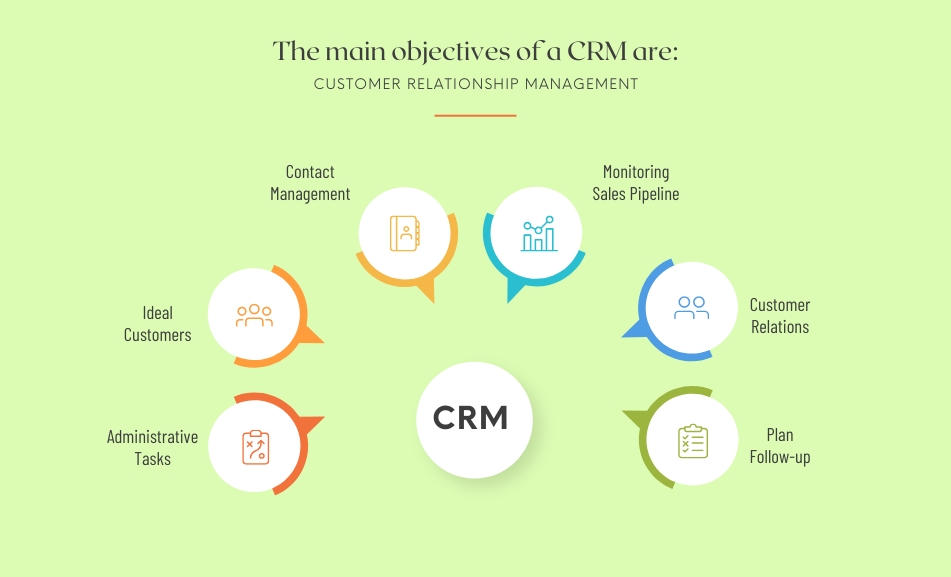
The main objectives of a CRM are:
Organizing customer data: Keeping all customer information like contact details, purchase history, and preferences in one easily accessible system.
Improving communication: Making sure every customer interaction, whether through sales, support, or marketing, is tracked and consistent. Streamlining sales and marketing: Helping teams follow up on leads, automate tasks, and focus on activities that drive growth. In short, a CRM is like the central nervous system of a business—it connects different parts of your operations and makes sure nothing falls through the cracks.
Learn more about how Green Lines CRM helps businesses manage customers and operations here.
3. Types of CRM Systems
Not all CRMs are the same—different businesses need different solutions. Broadly, CRM systems fall into three main categories:
Operational CRM
These CRMs focus on automating day-to-day tasks like sales follow-ups, marketing campaigns, and customer service. The goal is efficiency—making sure teams spend less time on manual work and more time building relationships. (Examples: Salesforce, HubSpot)
Analytical CRM
Here, the focus is on data. Analytical CRMs collect customer information and turn it into insights—like who your best customers are, what products they love, and when they’re most likely to buy again. (Examples: Zoho CRM, Microsoft Dynamics)
Collaborative CRM
These CRMs are all about communication. They help different teams—sales, marketing, and customer support—share information so that the customer gets a seamless experience. (Examples: Pipedrive, Freshsales)
Where Green Lines Stand Out
Green Lines is unique because it doesn’t just fit into one category—it combines the best of all three. It automates operations (like an operational CRM), uses AI-driven analytics to deliver thoughtful insights (like an analytical CRM), and connects payment systems, POS, and teams together for a truly collaborative CRM experience.
This all-in-one approach means businesses don’t need multiple tools—Green Lines is a complete CRM ecosystem built for SMEs and enterprises looking for growth and efficiency.
4. Key Features of a CRM
A good CRM isn’t just a database—it’s a toolbox that makes customer management easier and smarter. Here are some of the essential features every modern CRM should have:
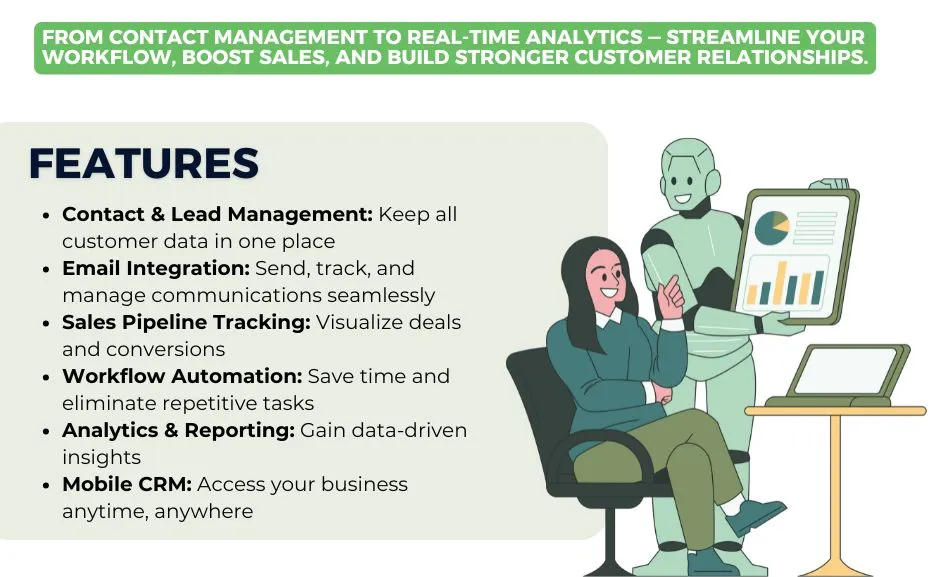
Contact & Lead Management
Store all customer information in one place, from names and numbers to purchase history and preferences. This makes it easy to follow up with leads and never lose track of opportunities.
Email Integration
CRMs allow you to connect your email directly to the system so you can send, track, and manage conversations without switching between apps.
Sales Pipeline Tracking
Visualize every stage of your sales funnel, from new leads to closed deals. It helps teams prioritize the right prospects and forecast revenue more accurately.
Task & Workflow Automation
Repetitive tasks—like sending reminders, assigning follow-ups, or generating invoices—can be automated, giving your team more time to focus on selling and serving customers.
Analytics & Reporting
CRMs provide clear reports and dashboards so you can measure performance, understand customer behavior, and make smarter decisions.
Mobile CRM (on-the-go usage)
With mobile apps, teams can update deals, check customer info, and stay connected anytime, anywhere.
Why Green Lines is Different
Green Lines goes beyond the basics. Along with all the above features, it offers AI-powered insights, 44+ industry-specific modules, and seamless POS & payment integration. That means businesses don’t just manage customer relationships—they also streamline their finances, inventory, and day-to-day operations in one place.
It’s like having a CRM, accounting system, and POS solution all rolled into one powerful platform.
5. Benefits of Using a CRM
Adopting a CRM isn’t just about using new software—it’s about transforming the way your business connects with customers. Here are some of the most significant benefits:
Improved Customer Retention & Satisfaction
By keeping track of every interaction, a CRM ensures that customers feel heard and valued. Quick responses and personalized experiences naturally lead to higher satisfaction and long-term loyalty.
Increased Sales
CRMs help teams nurture leads, follow up at the right time, and close deals faster. With clear pipelines and reminders, opportunities are never missed, which means more revenue for the business.
Boosted Productivity & Efficiency
Automating repetitive tasks—like sending follow-up emails or generating reports—saves hours of manual work. This allows teams to focus on what truly matters: building relationships and driving growth.
Data-Driven Decision Making
Instead of guessing, managers can rely on real-time data and reports. From customer trends to sales forecasts, CRMs provide the insights needed to make smarter business decisions.
Stronger Team Collaboration
With all data stored in one system, sales, marketing, and support teams can work together seamlessly. Everyone stays on the same page, which results in a smoother customer journey.
The Green Lines Advantage
Green Lines takes these benefits to the next level by combining AI-powered automation, POS integration, and industry-specific modules. This means businesses not only retain more customers but also optimize their financial operations, improve cash flow, and grow faster—all within one unified system.
With Green Lines, a CRM isn’t just a tool—it becomes your business growth engine.
6. How CRM Helps Different Businesses
Every business is different—but the need to manage customers effectively is universal. Here’s how a CRM makes an impact across industries:
Small Businesses: Affordable tools & growth tracking
For startups and small companies, managing customers on spreadsheets quickly becomes overwhelming. A CRM helps keep everything organized—leads, sales, and customer interactions—without breaking the budget. It gives small businesses the foundation to grow with confidence.
Enterprises: Scalability & multi-team management
Large organizations deal with multiple departments, locations, and thousands of customers. A CRM ensures all teams—sales, marketing, support—work together seamlessly, with a unified view of every customer. This eliminates silos and makes scaling much smoother.
E-commerce: Customer buying behavior analysis
In e-commerce, data is king. A CRM helps businesses track customer behavior, favorite products, and buying patterns. With these insights, stores can personalize marketing, recommend the right products, and increase repeat purchases.
Real Estate & Service Businesses: Smarter client management
Real estate agents and service providers thrive on relationships. A CRM keeps track of every inquiry, property viewing, and client conversation. Instead of juggling WhatsApp chats and Excel sheets, everything is logged in one system—making follow-ups faster and more professional.
How Green Lines Fits All
Green Lines was designed with flexibility in mind. Whether you’re a small café in Dubai, a growing e-commerce store in Riyadh, or a real estate company managing hundreds of clients, Green Lines adapts to your needs. With 44+ industry-specific modules, AI-powered insights, and built-in payment + POS integration, it becomes more than a CRM—it’s a complete business platform tailored to your growth.
7. Popular CRM Tools in the Market
When it comes to CRM solutions, the market is full of options—each with its own strengths. Here are some of the most popular CRMs that businesses often consider:
Salesforce
One of the most powerful CRMs in the world, Salesforce is known for its flexibility, integrations, and enterprise-level features.
HubSpot CRM
A user-friendly CRM that’s great for startups and growing businesses. It offers a free plan, making it easy to get started.
Zoho CRM
A cost-effective and versatile option, Zoho is widely used by SMEs thanks to its affordable pricing and wide range of features.
Microsoft Dynamics 365
Best suited for companies already using Microsoft products, this CRM provides strong integrations and enterprise-level solutions.
Freshsales
A clean and simple CRM focused on sales pipeline management and automation, ideal for businesses that want quick adoption.
Green Lines (AI-Powered CRM Platform)
While the above CRMs are globally recognized, Green Lines brings something unique to the table. It’s an AI-powered, all-in-one business platform that combines CRM, POS, payment integration, and accounting into a single solution.
Here’s why Green Lines is different:
All-in-one ecosystem: CRM + POS + Payments + Accounting under one roof.
AI-powered automation: Smarter insights into sales, pricing, and customer behavior.
44+ industry-specific modules: Tailored solutions for SMEs across multiple industries.
Seamless payment integration: Strategic partnership with Magnati for smooth financial transactions.
Enterprise-ready: Along with SME solutions, Green Lines also offers enterprise-grade scalability for larger organizations.
Real-time mobile access: Manage your entire business anytime, anywhere through a unified app.
With Green Lines, businesses don’t just get a CRM—they get a complete growth engine designed to simplify operations, boost efficiency, and scale with confidence.
8. How to Choose the Right CRM
With so many CRM options in the market, choosing the right one can feel overwhelming. But if you break it down into a few key factors, the decision becomes much easier:
Understand your business size & goals.
A startup doesn’t need the same system as a multinational. The right CRM should match where your business is today—and where you want it to be tomorrow.
Budget & scalability
Cost matters, but so does growth. Look for a CRM that fits your current budget but can also scale as your customer base and operations expand.
Integration with existing tools
Your CRM shouldn’t sit in isolation. It needs to connect with the tools you already use—like email, ERP systems, WhatsApp, or POS devices—so everything runs smoothly together.
Ease of use & customization
The best CRM is the one your team actually uses. Choose a platform that’s simple, intuitive, and flexible enough to adapt to your specific workflows.
Why Green Lines Fits the Criteria
Green Lines checks all these boxes. It’s affordable for SMEs, yet powerful enough to scale for enterprises. With 44+ industry modules, deep POS and payment integration, and an AI-powered mobile app, it adapts to your exact needs. Most importantly, it’s built to be simple, customizable, and ready to grow with your business.
In short, Green Lines isn’t just the right CRM—it’s the wise CRM choice for businesses that want to stay ahead.
9. Future of CRM
The way businesses manage customer relationships is changing rapidly. Traditional CRMs are no longer enough—customers expect faster responses, personalized experiences, and seamless service across every channel. A few significant trends are shaping the future of CRM:
AI & Machine Learning
CRMs are becoming smarter, using AI to predict customer behavior, recommend next steps, and even automate pricing strategies.
Chatbots & Self-Service
Customers want instant answers. Chatbots and AI-driven support are making 24/7 service possible without extra staff.
Predictive Analytics
Instead of only tracking what already happened, future CRMs will forecast what’s likely to happen—like which leads are most likely to convert.
Social Media & Omnichannel Integration
From WhatsApp to Instagram, CRMs will unify every customer touchpoint so that no conversation gets lost.
How Green Lines Is Already Ahead
While many CRMs are still “catching up” with these trends, Green Lines is already built with the future in mind. With AI-powered automation, 44+ industry-specific modules, and deep integrations with POS, payments, and accounting, it gives businesses the insights and automation they’ll need tomorrow—today.
In other words, the future of CRM isn’t coming—it’s already here with Green Lines.
10. Conclusion
At the end of the day, a CRM is more than just software—it’s the heartbeat of your business. It keeps your customer data organized, makes communication seamless, and helps your team focus on what really matters: building lasting relationships.
In today’s digital world, no business can afford to operate without a CRM. From small startups to global enterprises, the right system drives growth, efficiency, and customer loyalty.
Why Green Lines?
Green Lines takes CRM a step further. It doesn’t just help you manage customer relationships—it unifies your entire business with AI-powered automation, 44+ industry-specific modules, POS and payment integration, and real-time insights. Whether you’re running a café, an e-commerce brand, or a large enterprise, Green Lines adapts to your needs and grows with you.
Don’t just manage your customers—empower your business.
Start your journey with Green Lines today and see how a more innovative CRM can transform the way you work.
Frequently Asked Questions (FAQs)
Q1. What is the main purpose of a CRM?
The core purpose of a CRM is to organize customer data, improve communication, and streamline sales and marketing activities. It helps businesses build stronger relationships with their customers. With Green Lines, this goes further—because it also integrates POS, payments, and accounting into one platform.
Q2. Is CRM only for big companies?
Not at all. Small and medium-sized businesses benefit just as much—sometimes even more—because a CRM helps them stay organized and grow faster. Green Lines is specially designed with 44+ industry-specific modules to meet the needs of SMEs while still offering enterprise-level scalability.
Q3. Which CRM is best for startups?
Startups need a CRM that’s affordable, easy to use, and scalable as they grow. While HubSpot and Zoho are popular, Green Lines stands out because it’s not just a CRM—it’s an all-in-one business growth engine with AI-powered tools and industry-ready solutions.
Q4. Can a CRM improve customer loyalty?
Yes. A CRM ensures every customer feels valued by tracking their history, preferences, and interactions. With Green Lines, businesses can go a step further by using AI insights to personalize offers, automate follow-ups, and deliver better service—leading to long-term loyalty.
Q5. How much does a CRM cost?
CRM pricing varies depending on features and scale—some tools charge per user, others per module. Green Lines offers flexible packages tailored to both SMEs and enterprises, so you only pay for what you actually need—without hidden costs.
Still have questions? Our team at Green Lines would be happy to guide you. Contact us today